At present, British economic prospects are relatively unsure. We are in a period of careful optimism, with adjustments made after the new inflation rate, but many startups still face obstacles when coming to get the right funds from investors. Although Britain showed a GDP growth of 0.7% in early 2025, many small businesses were still struggling with debt and economic challenges.
To better understand how startups navigating this environment, we have analyzed data from more than 114,000 businesses to reveal the truth about loans, funding, and debt in 2025. Our British startup financial statements include all fields that you need to know when starting a business and securing funds. This is what our researchers discovered:
Where does the British startup have the most debt?
Like we see the state of startups throughout the United Kingdom, each city has its own economy, and small businesses tend to develop in certain areas more than others. So, which city and industry experienced the worst debt in 2025?
Cities with the highest debt
As you expected, London is a city with the highest total debt in the UK. In more than 5,500 startups in the capital, more than £ 750,000,000 debt has been accumulated. That’s an average of £ 136,403 debt per startup. In comparison, Manchester’s total debt added up to £ 46,802,735 – a small portion of London’s financial problems.
London is not the only city with an average debt. Blackburn is another pioneer, with £ 401,584 averaged by 49 startups. Oxford Has 46 startups listed on our platform in the area, with an average of £ 301,910 in debt in each. Meanwhile, CambridgeThe average debt added £ 273,160 in 79 businesses, with a total of £ 21,579,655.
Some areas stand out because they have high average debts despite being home to less startups. WokinghamFor example, it has a total debt of more than £ 13 million even though it only becomes a home for 17 startups. Compared to other major cities, such as Newcastle (debt average £ 6.1 million in 128 startups) and York (£ 6.8 million debt on 81 startups), this is a shocking considering given the size of the city.
While London experienced the most debt as a whole, the fact that smaller areas can still collect large amounts of debt indicate that they are more dependent on external funding, which often cannot be returned given the size of the local economy. This should not prevent startup leaders from building their business far from capital, however, because some areas far from London have been proven financially successful.
The highest debt industry
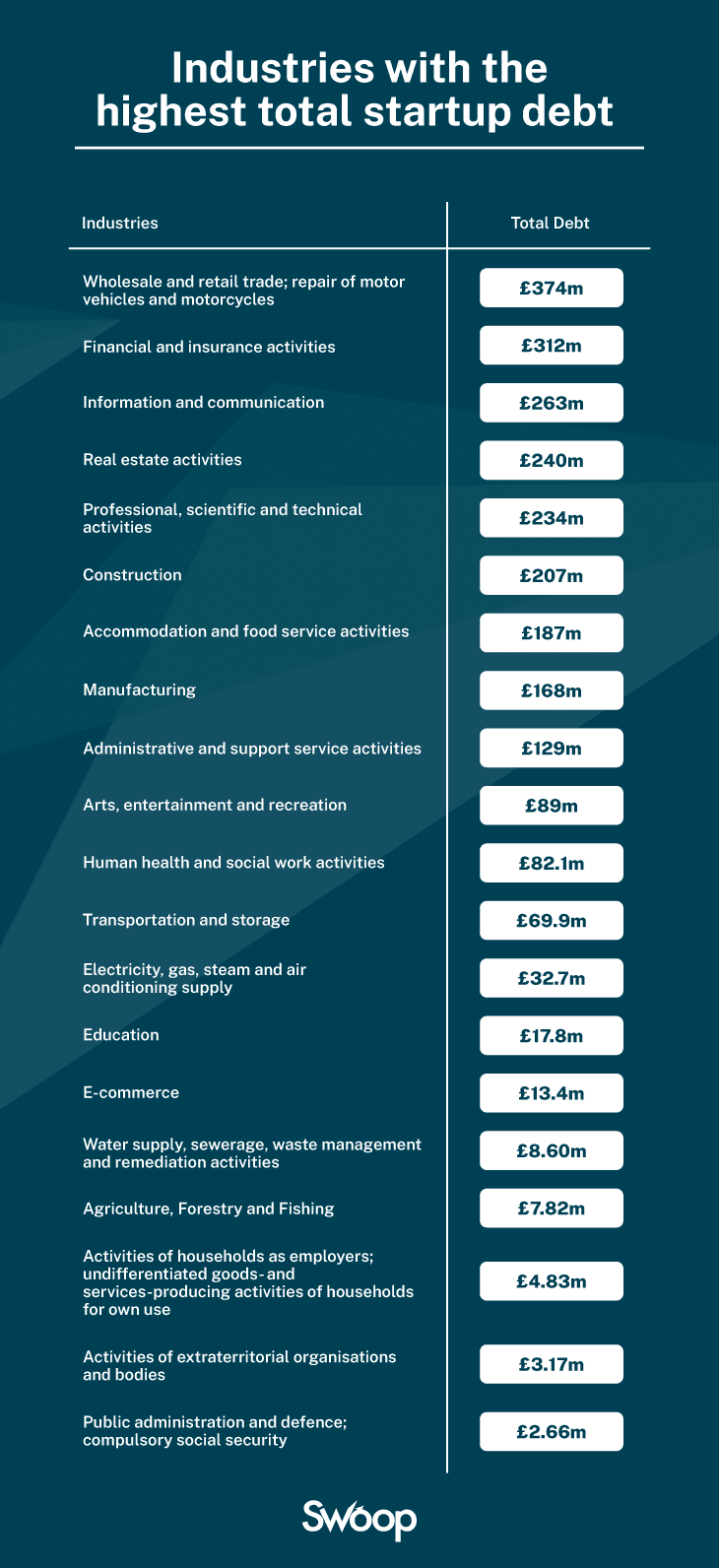
When it comes to the industry that borrows the most money, wholesale and retail trading Rank as the sector with the most debt in the UK. With 4,908 startups listed in this industry, more than £ 373 million in total. This industry is also the most common list of our platforms, shows that the market that is too saturated can play a role in its struggle to return with funding.
Finance and insurance Ranking as an industry with the second highest amount of debt, with around £ 312 million owed in 360 businesses. With a smaller market share, the average debt per business is much higher than other industrial sectors towards our top ranking.
Information and communication Business has a total of £ 262 million in debt, placing it in third, while real estate (£ 239 million) and professional, scientific and technical activities (£ 234 million) ranked fourth and fifth, respectively.
Some sectors with very expensive entry obstacles, such as construction (The sixth ranking), requires a lot of funds to get off the land. This may play a role in why these industries collect so much debt, because beginners need a large investment to enter their fields.
As a comparison, startups in the field with less competition and smaller investment can make a return without being flooded with debt. Sport, BiotekAnd mode Rank as some of our industries with the least total debt.
How do startup debts different based on sex?
When comparing the sex of the startup leader, the business led by women donated only 19% of the company and only 8% of the total debt. Meanwhile, the startup led by men contributed 60% of the business and 61% of the total debt. The remaining 21% of the business is led by men and women or does not have available gender data.
This shows that there are still significant obstacles faced by startups led by women when they come to secure funds, because they take parts that are much smaller than the market than the business led by men or mixed. Women can be detained because of access to funding, obstacles in their company’s hierarchical structure, or even different attitudes towards taking risks than male leaders who experience fewer struggles in their role.
Which city has the highest fund success?
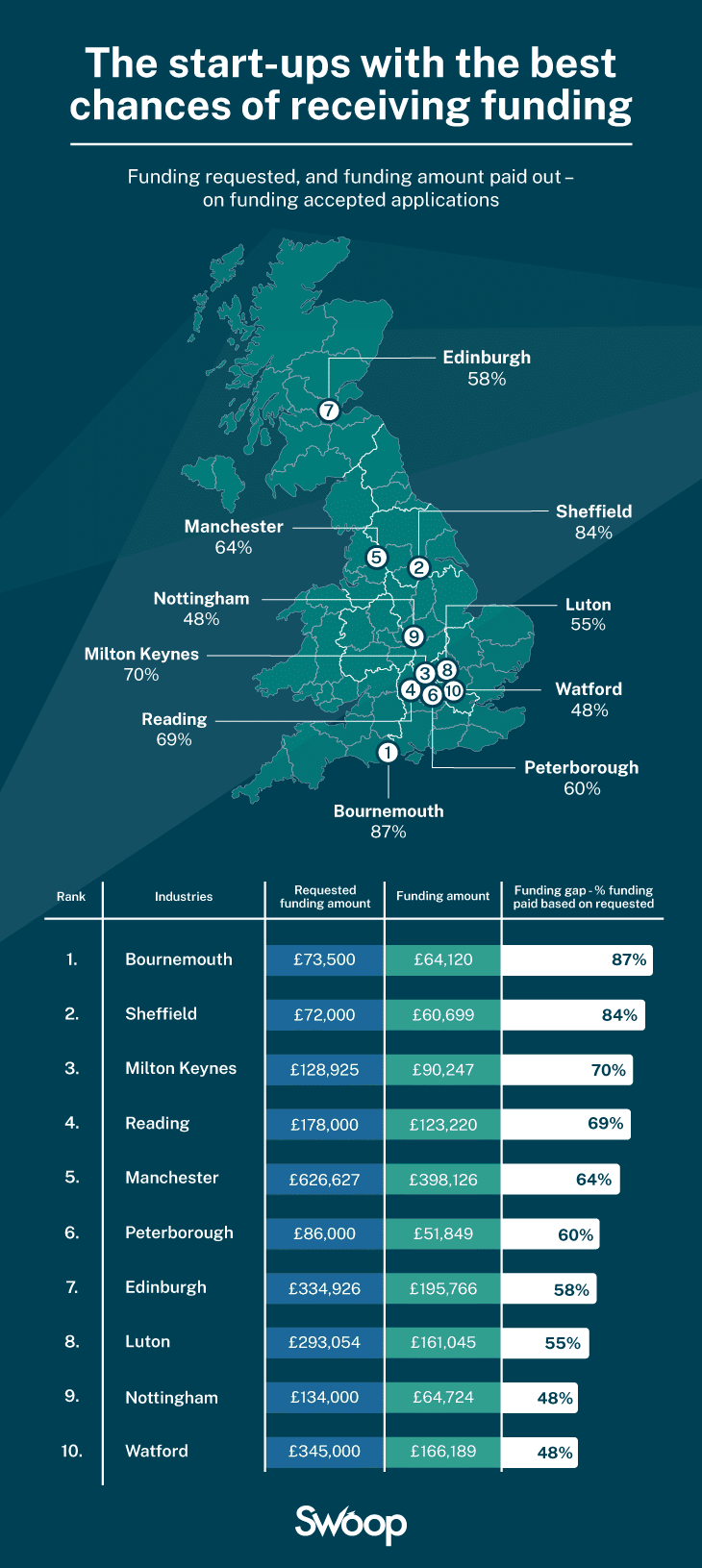
When London’s total debt continues to grow, many cities far from the capital began to be hotspots for the success of startups, with a number of regional cities beyond London in the growth of their small businesses.
Bournemouth Ranking as a city where startups are likely to receive funds, with 87% of funds in the area paid from the request that we monitor. Compared to the average number of requested £ 73,500, businesses are usually given £ 64,120.
Sheffield followed behind with 84% of the funds received, while Milton Keynes Finis the third with 70%. Read (69%) and Manchester (64%) complete the top five.
This smaller area is likely to apply to loans with more specific goals in mind or access regional funds that allow them to focus on smaller target demographics. Maybe this is why we pay attention to regional hotspots that receive more attention from startup lenders than London in 2025.
In comparison, London’s startup only received 22% of the requested funds, ranking to the bottom end of our data. The main city with the least funding success is Liverpool, with only 4% of the request fulfilled – compared to the average of £ 10,000,000 in demand, only £ 429,600 is usually given.
Which industry is most likely to get safe funds?
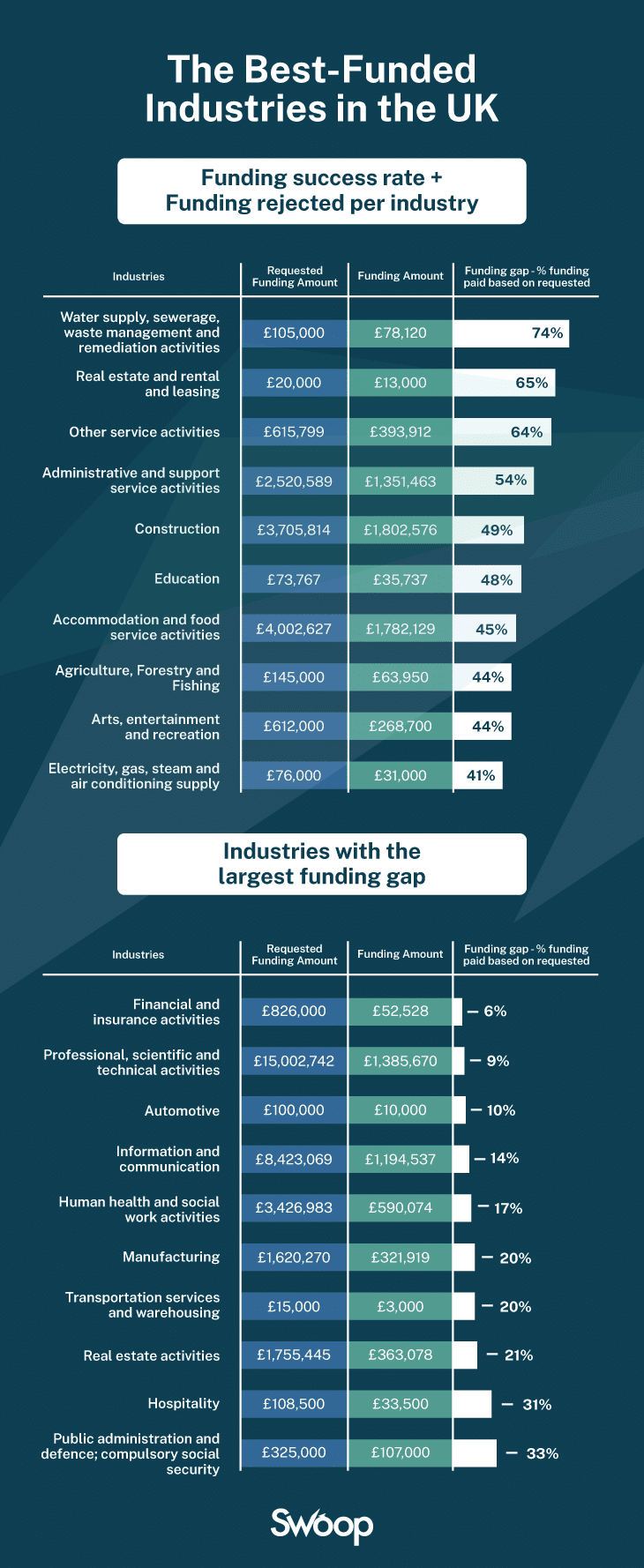
With some sectors seeing greater demand for startup businesses than others, it is clear that certain industries are more likely to get funds from investors than regions with fewer demand or greater risk of failure.
According to our data, Supply of water, waste, and waste management Business is the most likely to receive a large amount of funds requested. With an average demand in the field of £ 105,000, investors are usually given £ 78,120 for startup leaders, resulting in a success rate of 74%.
Real estate and rent Service is the second most successful field, with 65% of funds secured (£ 13,000 is given an average compared to the requested £ 20,000), while Administrative services The third rank with a success rate of 54%, although it requires more funds to the average ranking industry (£ 2.5 million requested vs. £ 1.3 million given).
In terms of industries that struggle to receive safe funds, Financial and insurance services is the most likely to receive only a small portion of the requested funds, with 6% given average. This may be due to a large risk of failure with this business, and the effect of knock-on from money to customers.
Science And Automotive industry Both are also ranked under our findings (9% and 10%). The gap in funding requested and given in these sectors shows that more specialist funds may be needed to enable innovative projects to get a strong start.
These figures may not only reflect the availability of funding in these sectors but also the financial sharpness of their leaders. Strong knowledge about the economy and your business goals are more likely to give you safe funds rather than relying on interesting business ideas, so be sure to prepare in -depth plans when applying for financial assistance with your startup.
General tips for funding success
Each startup has its own unique identity, so understanding your goals and priorities when launching a business will help you secure funds that are suitable for you. However, as a general rule, you can try to follow this advice to provide the funds you want:
1. Be unique
Our data shows that oversaturation is a big problem in the current startup climate. If you are looking for funds in the industry with too many competitors, or in a city with too much debt, you might face the obstacle in when it comes to launch your business.
If you can focus on an area or demographic that might feel less represented by other startups, you will be less depressed to compete with other businesses on the field, letting you grow your startup with your own speed.
2. Understand how need to enter your field
As we mentioned before, some industries have a far more expensive entry barrier than others. Fields such as construction or science will require equipment that prices are much more expensive than smaller industries, such as retail or hospitality. Understanding the scope of your investment before you apply for funding is important, because you want your lender to feel as if you know the ins and outs of your business plan.
3. Consider your choice
With a variety of business grants and business loans offered, it is important to find options that suit your needs. By examining your loan options as a whole, you can find providers who can meet your goals, eliminate the complexity of the funding process.
News
Berita
News Flash
Blog
Technology
Sports
Sport
Football
Tips
Finance
Berita Terkini
Berita Terbaru
Berita Kekinian
News
Berita Terkini
Olahraga
Pasang Internet Myrepublic
Jasa Import China
Jasa Import Door to Door
Originally posted 2025-08-28 03:32:27.